
GHG Validation and Verification Services (CDM, VERRA, GS, GCC, JCM)
Our GHG Validation and Verification services support climate change mitigation projects and carbon programs operating under internationally recognized schemes. We focus on accuracy, transparency, and consistency to ensure that greenhouse gas data stands up to regulatory, investor, and stakeholder scrutiny.
- Credible, defensible assessments that strengthen trust in reported data
- Independent validation and verification of GHG projects and programs
- Alignment with approved methodologies and scheme requirements

Internal Audits for ISO 17029 and ISO 14065
Our Internal Audit services help validation and verification bodies ensure compliance with ISO 17029 and ISO 14065 requirements. We assess systems, processes, and controls to confirm that operations are impartial, competent, and consistently implemented.
- Support for accreditation, surveillance, and continual improvement
- Evaluation of governance, impartiality, and competence requirements
- Identification of gaps and areas for corrective action
Life Cycle Assessment (LCA) and Carbon Footprint Studies
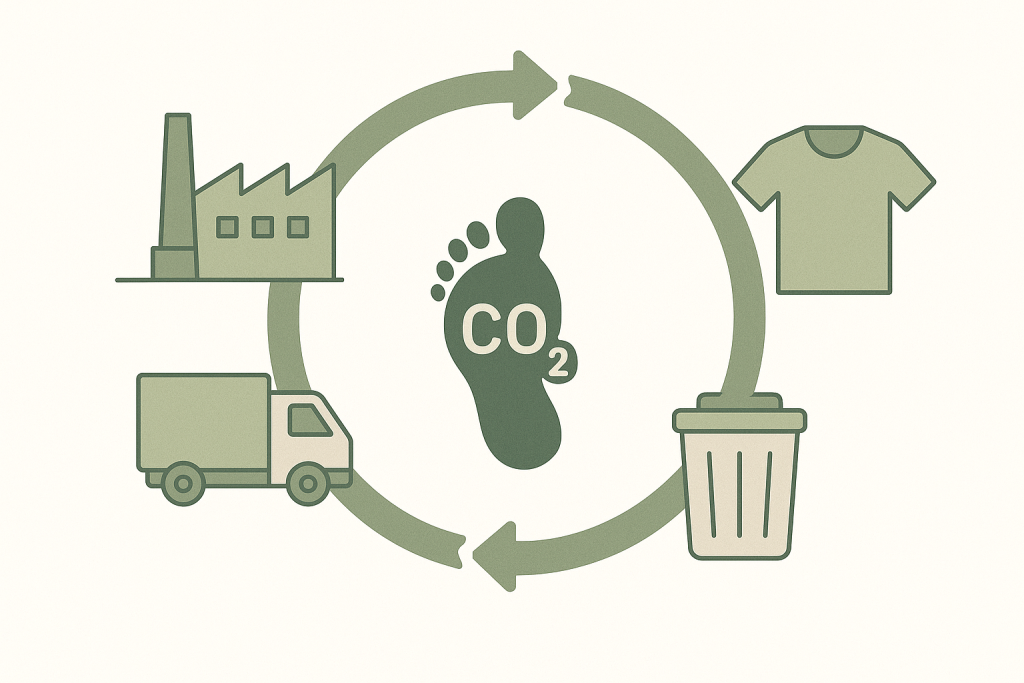
Our LCA and Carbon Footprint Studies help organizations understand the environmental impacts of their products, processes, or services across the entire life cycle. Using globally recognized ISO standards, we provide reliable assessments that support informed decision-making.
- Clear insights to support sustainability planning and communication
- Life cycle and carbon footprint quantification using ISO methodologies
- Structured analysis of emissions and environmental impacts
Net Zero Emission and Decarbonization Strategies
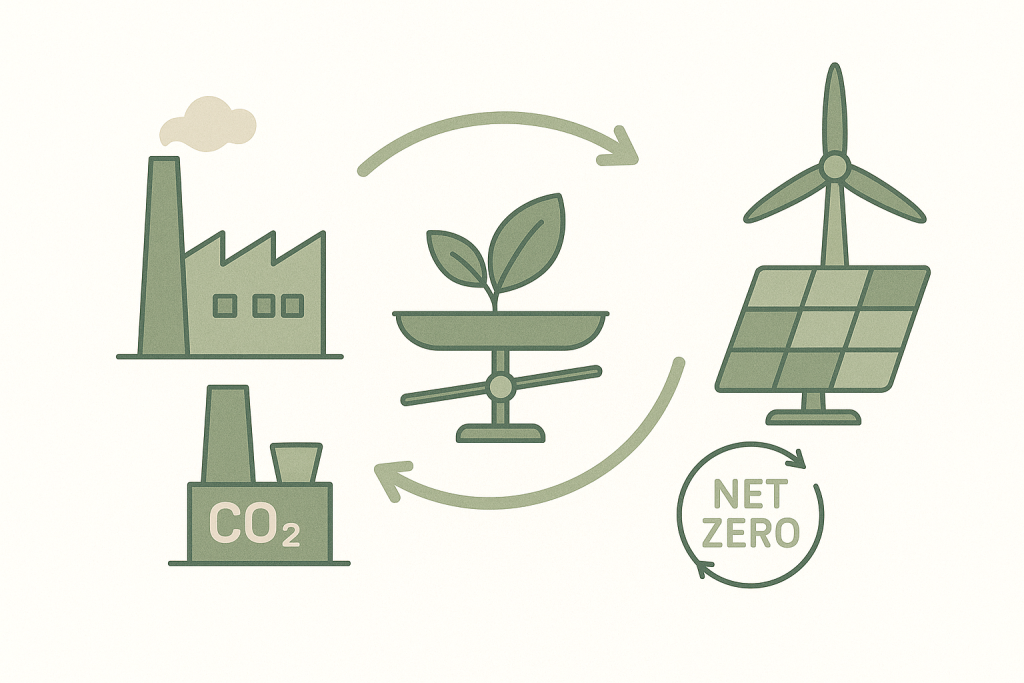
Our Net Zero and Decarbonization Strategy services help organizations move beyond commitments toward practical and achievable emission reduction pathways. We support the development of structured, science-based roadmaps aligned with global frameworks.
- Alignment with GHG Protocol, ISO standards, SBTi, and policies
- Assessment of current emissions across the value chain
- Development of credible, data-driven reduction strategies
Sustainability Reporting as per GRI Standards
Our Sustainability Reporting services help organizations prepare transparent and credible disclosures aligned with GRI Standards. We support the structured measurement and communication of environmental, social, and governance performance.
- Preparation of clear, GRI-compliant sustainability reports
- Identification and mapping of material ESG topics
- Compilation and validation of sustainability data
Carbon Border Adjustment Mechanism (CBAM) Reporting
Our CBAM Reporting services support exporters in meeting the European Union’s CBAM requirements. We help ensure accurate calculation and reporting of embedded emissions for regulated products and sectors.
- Support for regulatory compliance and EU market access
- Calculation of embedded emissions as per the CBAM methodology
- Preparation and review of CBAM-compliant reports
Water, Energy, and Supply Chain Audits
Our Water, Energy, and Supply Chain Audit services help organizations assess resource efficiency and operational performance. These audits provide insights into consumption patterns, risks, and improvement opportunities.
- Actionable recommendations for performance improvement
- Evaluation of water, energy, and supply chain efficiency
- Identification of inefficiencies and operational risks

BRSR Reporting as per SEBI Guidelines
Our BRSR Reporting services help listed companies meet SEBI’s Business Responsibility and Sustainability Reporting requirements. We provide end-to-end support for accurate, structured, and compliant disclosures.
- Preparation of BRSR and BRSR Core compliant reports
- Gap assessment against SEBI BRSR requirements
- Data collection and indicator-wise reporting support
Quantification of Scope 3 Emissions
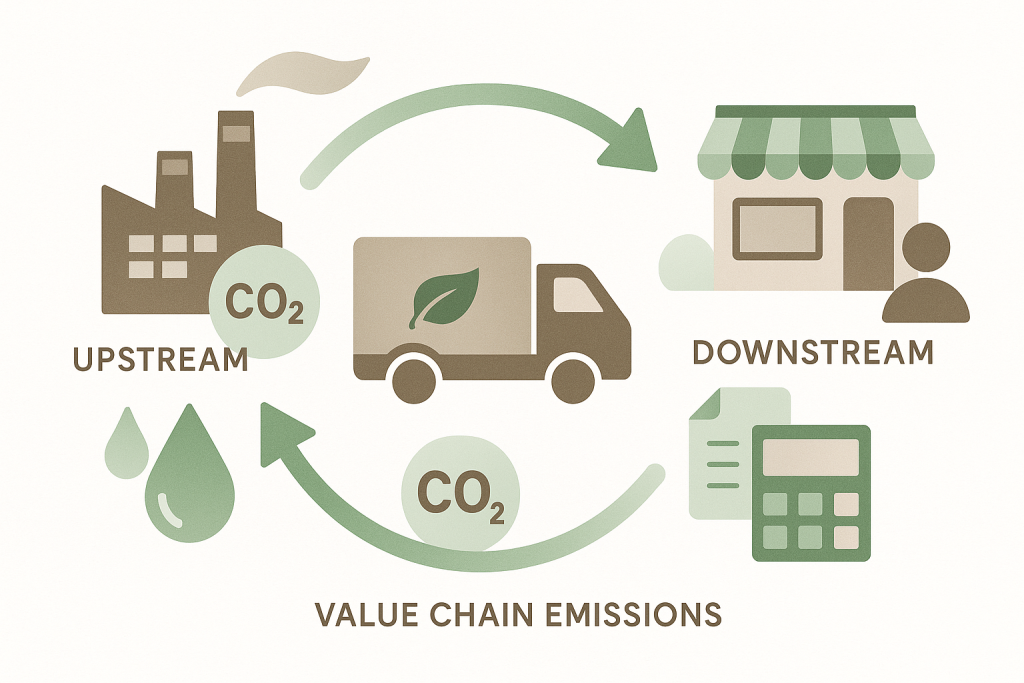
Our Scope 3 Emissions Quantification services help organizations measure and manage emissions across their value chain. We support structured and practical approaches to address one of the most complex areas of GHG accounting.
- Insights to support reduction planning and reporting
- Identification of relevant Scope 3 categories
- Calculation using accepted methodologies and data sources

ESG Audits and Due Diligence
Our ESG Audit and Due Diligence services provide independent assessments of environmental, social, and governance practices. These services support risk identification, regulatory alignment, and informed decision-making.
- Support for investor confidence and compliance readiness
- Review of ESG policies, processes, and controls
- Identification of ESG risks, gaps, and improvement areas
Customised Training Services
Article 6.4: Paris Agreement Crediting Mechanism (PACM)
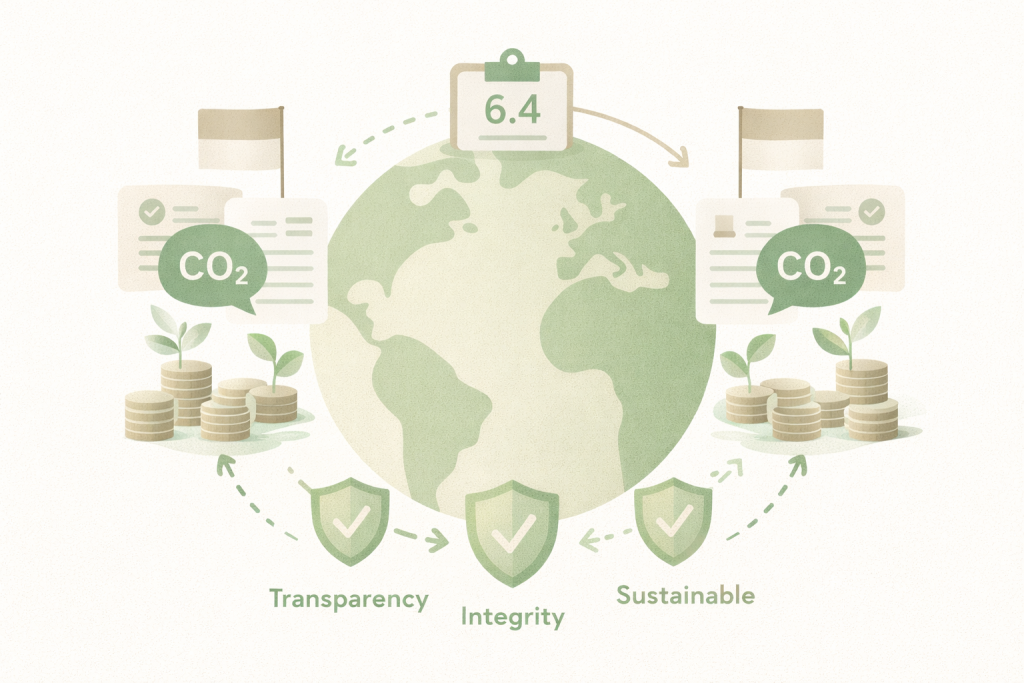
Article 6.4 of the Paris Agreement establishes an international carbon crediting mechanism that allows countries to meet their climate targets in a cost-effective manner by trading credits generated from verified emission reduction and removal projects, while ensuring environmental integrity and sustainable development.
- Enables international carbon crediting under the Paris Agreement
- Supports cost-effective achievement of national climate targets (NDCs)
- Ensures transparency, integrity, and sustainable development outcomes

JCM: Joint Crediting Mechanism
The Joint Crediting Mechanism (JCM) is a Japan-led bilateral framework under Article 6.2 of the Paris Agreement that promotes low-carbon technology transfer and investment in partner countries, such as India, by recognizing and sharing verified emission reductions between participating nations.
- Facilitates bilateral carbon credit cooperation between countries
- Promotes low-carbon technology transfer and investment
- Supports the achievement of Nationally Determined Contributions (NDCs)
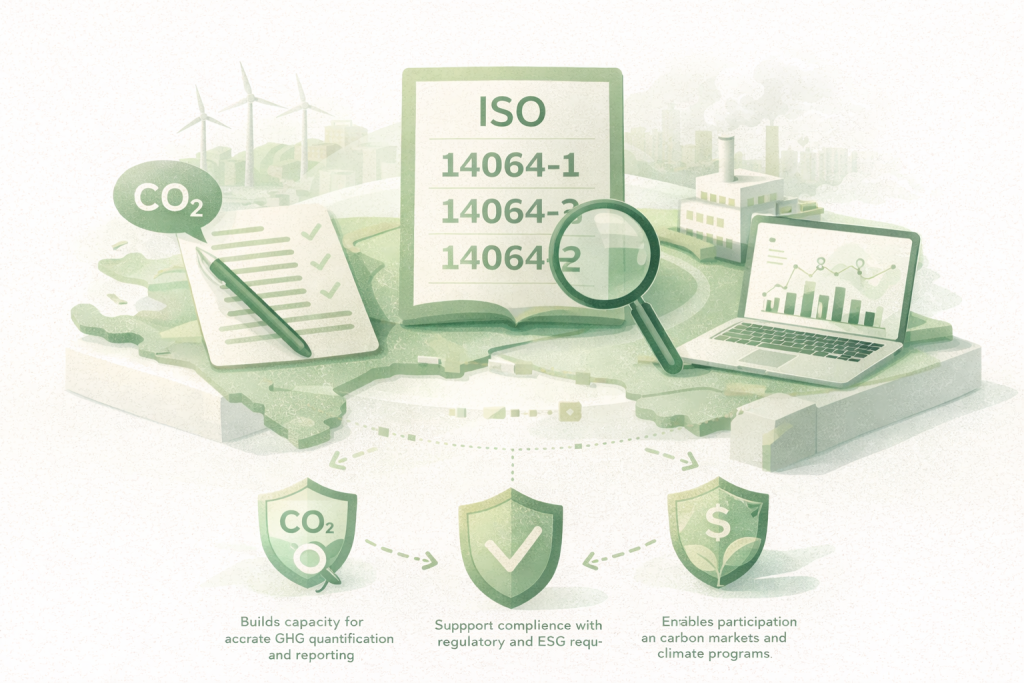
ISO 14064-1, 14064-2, and 14064-3 Training Program
The ISO 14064 training program equips organizations and professionals with the technical knowledge required to quantify, report, and verify greenhouse gas (GHG) emissions and emission reductions in accordance with internationally recognized standards, supporting credible climate and ESG initiatives.
- Builds capacity for accurate GHG quantification and reporting
- Supports compliance with regulatory and ESG requirements
- Enables participation in carbon markets and climate programs